
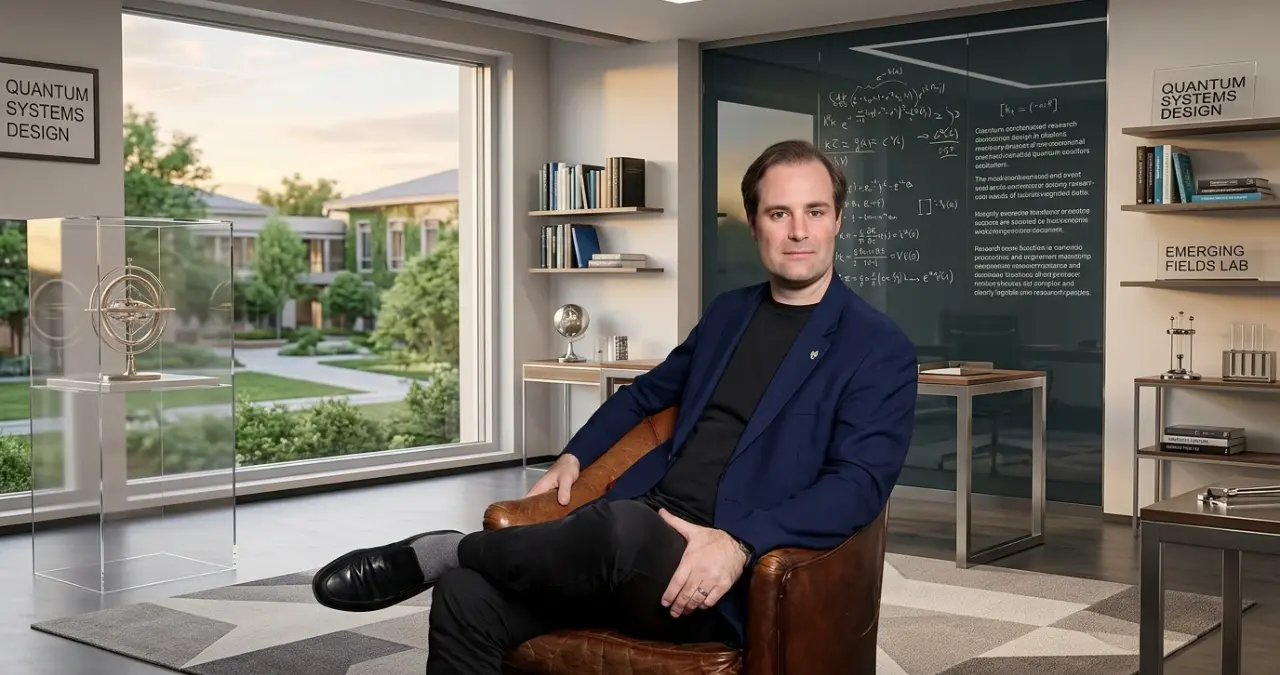
Ben Delo net worth is estimated at around $1 billion, a fortune built almost entirely from his roughly 30% ownership stake in BitMEX, the cryptocurrency derivatives exchange he co-founded in 2014. Delo became the UK’s youngest self-made billionaire off the back of that stake, but his financial story since then has been shaped as much by what he’s given away and lost in legal penalties as by what he’s earned.
Unlike most billionaires, Delo’s wealth was never built on public shares or audited disclosures — BitMEX was a private company, so any net worth figure is an estimate based on the platform’s trading volume, industry comparisons, and Delo’s own disclosed donations. That makes the number harder to pin down than, say, a tech CEO with a public stock ticker, but the broad picture — a billion-dollar fortune, largely intact despite a federal guilty plea and tens of millions in charitable giving — is well documented.
Quick Facts
| Full name | Ben Peter Delo |
| Born | 24 February 1984, Sheffield, England |
| Education | University of Oxford (Worcester College) — double first-class honours, Mathematics & Computer Science, 2005 |
| Known for | Co-founder, BitMEX; inventor of the Bitcoin perpetual swap |
| Net worth | ~$1 billion (estimated) |
| Source of wealth | ~30% equity stake in BitMEX |
| Legal history | Pleaded guilty to a Bank Secrecy Act violation (2022); pardoned by President Trump (March 2025) |
| Philanthropy | Giving Pledge signatory (2019); founder, Sheila Coates Foundation |
| Nationality | British |
How Ben Delo Built His Fortune
Delo’s path to a billion-dollar net worth didn’t start in crypto. After graduating from Oxford with top honours in maths and computer science, he began his career as a software engineer at IBM, where he was credited on several patents, before moving into high-frequency trading roles at GSA Capital and JP Morgan. In 2012, he relocated to Hong Kong for JP Morgan and started experimenting with Bitcoin around the same time.
That interest turned into a business in 2014, when Delo co-founded BitMEX alongside Arthur Hayes and Samuel Reed, financed initially by family and friends. Over the next few years the exchange grew into one of the dominant venues for crypto derivatives trading, and at its peak handled more than a trillion dollars in annual trading volume — roughly comparable to the entire Canadian stock market.
The Perpetual Swap: Delo’s Key Invention
The single product most responsible for BitMEX’s rise — and for Delo’s fortune — was the perpetual swap, a derivatives contract that lets traders bet on crypto prices without an expiry date. Ryan Radloff, then CEO of CoinShares, called it “possibly the most successful derivatives product in the history of capitalism,” and Bloomberg’s Izabella Kaminska has described Delo as “the BitMEX co-founder most responsible for the perpetual swap’s invention.” The product was later copied across the industry and remains the standard way crypto exchanges offer leveraged trading today.
Becoming Britain’s Youngest Self-Made Billionaire
By 2018, Delo had become the United Kingdom’s first billionaire from bitcoin, and its youngest self-made billionaire, a distinction reported by The Times. That wealth was tied directly to his BitMEX equity rather than liquid cash, meaning his actual net worth has always moved with the fortunes of the exchange itself and the broader crypto market.
What Happened to BitMEX — And Why It Matters for Delo’s Wealth
BitMEX’s dominance didn’t last. As rival exchanges — including Binance, Bybit, and OKX — adopted the perpetual futures model BitMEX pioneered, they captured much of its market share. The regulatory troubles that followed compounded the problem, and in 2026 the situation reached its conclusion: BitMEX announced it would wind down its exchange operations entirely, closing the chapter on the platform that once defined crypto derivatives trading.
Because Delo’s fortune was concentrated in BitMEX equity rather than diversified investments, the exchange’s decline is directly relevant to any current estimate of his net worth — though exactly how much he cashed out, reinvested, or retained by the time of the wind-down isn’t publicly disclosed.
The Bank Secrecy Act Case and Presidential Pardon
Delo’s financial story is inseparable from his legal one. In 2020, US authorities charged Delo and his BitMEX co-founders with violating the Bank Secrecy Act for failing to implement an anti-money-laundering program at the exchange. He pleaded guilty, and in June 2022 received 30 months of probation without home confinement, along with a $10 million penalty as part of the resolution with US authorities.
That outcome changed in March 2025, when President Donald Trump issued full and unconditional pardons to Delo, Arthur Hayes, Samuel Reed, Gregory Dwyer, and the BitMEX corporate entity — coming after Delo had already completed his probation. The pardon erased the federal conviction but didn’t reverse the $10 million penalty already paid.
Ben Delo’s Philanthropy and the Giving Pledge
Delo has been unusually vocal about giving away, rather than accumulating, wealth. In 2019, he became one of the youngest-ever signatories of the Giving Pledge, committing to give away the majority of his wealth during his lifetime. By his own account, cumulative giving now exceeds £100 million.
The Sheila Coates Foundation
Delo established the Sheila Coates Foundation in 2020 to support autistic students in mainstream schools and colleges, naming it for an autism advocate whose support he has credited with transforming his own education growing up. In 2026, he gave the foundation a £25 million endowment — his largest single commitment to the cause to date.
Funding Mathematics Research
That same year, Delo committed as much as £20 million to the London Institute for Mathematical Sciences (LIMS), split between £10 million upfront and £10 million in matching funds, reflecting his own academic background in the subject. He also serves as a trustee of the Institute.
Earlier Giving
His charitable record predates these headline gifts. In October 2018, Delo donated £5 million to his alma mater, Worcester College at the University of Oxford, endowing two teaching fellowships in perpetuity — making him, at the time, the youngest major donor in the college’s history.
Political Donations and Return to the UK
Delo’s public profile shifted again in 2026 when he became significantly more politically active in Britain. He donated £4 million to Reform UK in the first part of the year, a sum large enough to place him among the largest individual political donors in modern British history. Around the same time, he announced he was returning to Britain after years based in Hong Kong.
Early Life and Education
Delo grew up in the Oxford area and was expelled from three separate primary schools before flourishing at Lord Williams’s School, a state secondary school in Thame, Oxfordshire, once he received structured support. He has spoken about being diagnosed with Asperger’s syndrome as a child, an experience that later shaped his interest in funding neurodiversity causes. From there, he won a place at Oxford’s Worcester College, graduating in 2005 with a double first-class degree in Mathematics and Computer Science — reportedly narrowly avoiding expulsion during his time there over an internet piracy incident.
Is Ben Delo’s Net Worth Still Growing?
Given BitMEX’s decline and eventual wind-down, plus tens of millions of pounds given away in recent years, it’s unlikely that Delo’s net worth is still climbing the way it did during BitMEX’s peak years. Most current estimates — including the commonly cited $1 billion figure — appear to reflect a fortune that has plateaued or modestly declined from its high point, offset partly by whatever returns he’s earned on investments outside the exchange. Because his holdings aren’t publicly disclosed, precise, up-to-date figures aren’t available, and existing estimates should be read as approximations rather than audited numbers.
FAQs
How did Ben Delo make his money?
Delo made his fortune primarily through his roughly 30% ownership stake in BitMEX, the cryptocurrency derivatives exchange he co-founded in 2014. He also played a lead role in inventing the perpetual swap, the trading product that drove much of BitMEX’s growth.
Is Ben Delo still involved with BitMEX?
No. Delo stepped back from an executive role at BitMEX in 2019 to focus on philanthropy, and in 2026 the company announced it was winding down its exchange operations altogether.
Was Ben Delo convicted of a crime?
He pleaded guilty in 2022 to a Bank Secrecy Act violation related to anti-money-laundering failures at BitMEX and received 30 months of probation plus a $10 million penalty. In March 2025, President Trump issued him a full pardon.
How much has Ben Delo given to charity?
Delo says he has donated more than £100 million to philanthropic causes, including a £25 million endowment to his Sheila Coates Foundation and up to £20 million to the London Institute for Mathematical Sciences, both in 2026.
What is the Giving Pledge, and has Ben Delo signed it?
The Giving Pledge is a commitment by wealthy individuals to give away the majority of their fortune during their lifetime or in their will. Delo signed it in 2019, becoming one of its youngest-ever signatories.
Why did Ben Delo donate to Reform UK?
In 2026, Delo gave £4 million to Reform UK, coinciding with his announced move back to Britain after years living in Hong Kong. The donation places him among the largest individual political donors in recent UK history.
The Bottom Line
Ben Delo’s roughly $1 billion net worth is a story of concentrated risk paying off once, then being deliberately redistributed rather than reinvested for further growth. He built his fortune fast — through a single company and a single financial innovation — and has spent the years since giving much of it away to causes tied to his own life story: neurodiversity, mathematics education, and free expression. With BitMEX now winding down and his giving accelerating, Delo’s financial profile looks less like a growing empire and more like a fortune in the process of being spent down on his own terms.
About the Author