
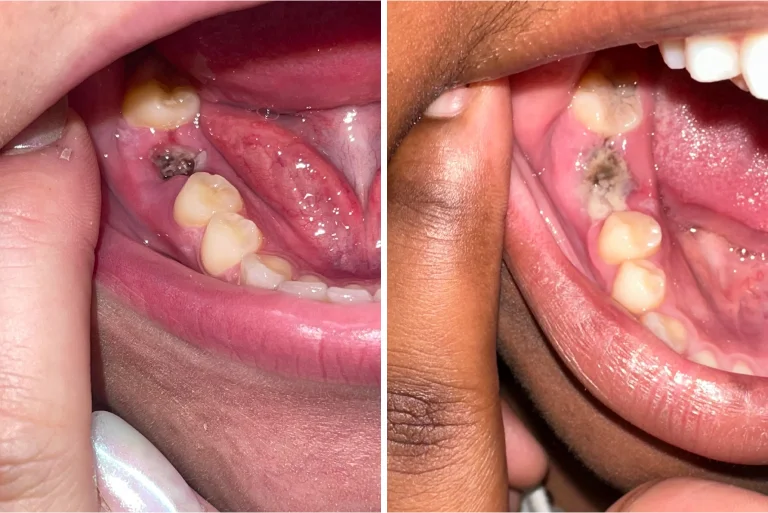
After having a tooth removed, it is completely normal to wonder whether your extraction site is healing properly. The appearance of the socket can change significantly during recovery, and some colors or textures may look concerning even when everything is progressing normally. Understanding the difference between dry socket vs normal healing can help you recognize warning signs and know when professional dental care may be necessary.
What Does Normal Healing Look Like?
Normal healing after a tooth extraction usually involves the formation of a blood clot inside the empty socket. This clot protects the underlying bone and nerves while the body begins repairing the area. During the early stages, the site may look dark red or almost black because of the blood clot.
As healing continues, the appearance can change. You may notice white, yellowish, or pale tissue developing over the socket. This does not automatically mean that the area is infected. In many cases, it represents fibrin and developing healing tissue. Mild tenderness, swelling, and sensitivity can also occur during the recovery period.
The important thing is that discomfort should generally improve over time. The area may remain sensitive for a while, but steadily decreasing pain is usually a reassuring sign.
What Does Dry Socket Look Like?
A dry socket develops when the protective blood clot becomes dislodged or breaks down before the extraction site has adequately healed. Without the clot, the underlying tissues and sometimes bone can become exposed.
Visually, a dry socket may appear like an unusually empty hole. Instead of seeing a dark blood clot or developing tissue, you may notice a pale or whitish area that could represent exposed bone. However, appearance alone cannot reliably confirm dry socket.
The most important clue is usually the pain. Dry socket often causes intense, throbbing pain that becomes worse rather than better after the initial recovery period. The pain may spread toward the ear, jaw, temple, or surrounding teeth. An unpleasant taste or bad breath may also occur.
Dry Socket vs Normal Healing
The biggest difference between dry socket vs normal healing is the progression of symptoms. With normal healing, discomfort generally becomes easier to manage as time passes. The extraction site may look unusual, but the overall condition tends to improve.
With dry socket, pain may become significantly stronger after initially improving. The socket can also look relatively empty, and unpleasant taste or odor may develop.
It is important not to diagnose yourself based solely on a picture. Extraction sites can look very different depending on the tooth removed, the person’s healing process, and how much tissue is visible.
When Should You See a Dentist?
Contact your dentist if you experience severe or increasing pain after an extraction, particularly if the pain seems to improve and then suddenly becomes much worse. You should also seek professional advice if you develop significant swelling, fever, persistent bleeding, pus, or other symptoms that concern you.
A dentist can examine the socket and determine whether the problem is normal healing, dry socket, infection, or another complication. If dry socket is diagnosed, professional treatment can usually provide significant relief.
Final Thoughts
Knowing the difference between dry socket vs normal healing can make the recovery process less stressful. A changing socket, unusual colors, and mild discomfort do not necessarily mean something is wrong. The overall trend matters most: normal healing generally becomes more comfortable, while dry socket is commonly associated with worsening, severe pain.
If you are uncertain about your extraction site, the safest approach is to have a dentist examine it rather than relying only on photographs or internet comparisons.
You may also read : allcelebrities.co.uk
About the Author